Showing posts with label BTS. Show all posts

BTS Is Back: Visiting HYBE After Jimin and Jungkook's Military Discharge


HYBE headquarters with large glass lettering saying "WE ARE BACK" to celebrate BTS’s return.
(“우리가 돌아왔다”, BTS 컴백을 알리는 하이브 본사 건물에 대형 글씨가 반갑습니다 “WE ARE BACK” – A powerful message welcoming BTS’s return on HYBE’s glass tower.)

The Return of BTS: A Visit to HYBE Headquarters

On the afternoon of June 15, 2025, I visited HYBE Headquarters located in Yongsan, Seoul. Just the day before, on June 13, news broke that BTS members Jimin and Jungkook had completed their mandatory military service. The air was still filled with emotion and excitement.

BTS members Jimin and Jungkook featured after completing military service.
(지민, 정국이 제대하는 늠름한 모습 Jimin and Jungkook, proudly returning after their military service.)

The area in front of the HYBE building near Yongsan Station was already packed with fans. ARMYs from all over the world had gathered to celebrate the discharge of Jungkook and Jimin. On the glass façade of the building, a bold message gleamed: "WE ARE BACK."

Wide shot of HYBE building with large “WE ARE BACK” sign
(멀리서도 선명하게 보이는 “우리가 돌아왔다”The “WE ARE BACK” sign is clearly visible even from afar.)

All around, large tour buses wrapped with BTS photos and history stood parked, showcasing the group's journey. Fans took photos in front of them, exchanged gifts, and shared emotional reunions with fellow ARMYs.


Will BTS Resume Full-Group Activities?

Since 2022, BTS members have been enlisting in the military one by one. Now, with Jungkook and Jimin having completed their service, many expect that BTS will resume full-group activities in the second half of 2025.

On June 13, both domestic and international media featured headlines like, "BTS: All 7 Members Have Discharged!" Fans responded with tears of joy, saying, "That day really came."

International BTS fans gathered near HYBE in warm weather.
(뜨거운 햇볕 아래에서도 세계 각국에서 많은 아미들이 BTS 컴백을 환영하고 있었어요 Under the summer sun, ARMYs from all over the world gathered to welcome BTS back.)

Especially around HYBE HQ, fan cafes had prepared congratulatory banners, support placards, and art buses, showcasing once again the incredible power of the BTS fandom.


How France's National TV2 Analyzed the BTS Phenomenon

Along with the discharge news came a fascinating report from France's national broadcaster, TV2. They analyzed why BTS’s return is once again capturing global attention:

  • BTS is not just a K-pop group, but a collective voice representing the emotions of youth around the world.

  • Through messages of self-esteem, generational identity, and global issues, they have built an unparalleled cultural influence.

  • TV2 concluded that BTS’s return is more than a comeback—it may become a historic moment that reshapes global culture in the late 2020s.

This international recognition reflects not only the group's stature but also the broader rise of K-CULTURE as a global cultural force.


Scenes in Front of HYBE Headquarters

A heartfelt banner message for Jungkook reads, “We’ve waited so long for you,” expressing fans’ deep anticipation
(정국아, 많이 많이 기다렸어 Jungkook, we’ve waited so long for you)

A large tour bus wrapped with Jungkook’s image is parked in front of HYBE HQ, a popular photo spot for fans
(하이브 본사 앞에 정차한 정국 사진으로 꾸며진 대형 래핑버스, 팬들의 인증샷 명소  A Jungkook-wrapped tour bus in front of HYBE headquarters)


Jimin-themed welcome bus parked outside HYBE HQ.
                   (회사 건물 앞에 주차되어 있는 “환영 지민” A fan-decorated Jimin bus parked right in front of HYBE.)         

The walk from Yongsan Station to HYBE felt very different from usual. On the street, a large bus wrapped with "Jimin" was parked, and next to it, a BTS history bus decorated in various styles from different years greeted fans. 

                          BTS history bus with photos from each year attracting fans.
                          (팬들은 데뷔부터 연도별로 이미지를 배치해놓은 버스 앞에 몰려 있어요
Fans flocked to the bus showcasing BTS’s journey from debut to now.)


In front of the building stood the HYBE logo encased in a glass frame, towering skyscrapers reaching the sky, and soft rays of sunlight breaking through the clouds.   

                                 BTS-themed photo zone set up for fans to enjoy taking photos.

                     (포토존 중에 한 곳, 사진 찍기 좋은 위치 One of the photo zones – a perfect spot for fan pictures.)

The HYBE logo displayed on the side of the building.
                     (건물 외벽 하이브 로고 HYBE logo on the building’s exterior.)

At a nearby fandom café (Mealtop), a BTS-themed photo zone was operating. Fans enjoyed ice cream while creating new memories together.

Photo area decorated with BTS visuals near HYBE.
                          (회사 건물 바로 옆에 있는 포토존, 꼭 들러 보세요. Be sure to visit this photo spot right next to the HYBE building.)

In Closing: A Moment Captured, A Story Shared

This visit wasn’t just about seeing a building. I wanted to share the feelings I experienced—through my blog and YouTube.

Message on the decorated BTS fan bus expressing gratitude.
(“BTS 만나기를 잘했어. 많은 ARMY를 만나기도 잘했어. 많은 행복을 줘서 항상 고마워” “Meeting BTS was a great choice. Meeting ARMY was even better. Thank you for the happiness.”)

It was a moment to document the present of Hallyu and dream about its future.

I plan to visit SM, JYP, and YG headquarters in the coming weeks, introducing the spaces and people behind the making of K-pop.

The fact that this journey began right here at HYBE, alongside the return of BTS, gives it a very special meaning.


Date of Visit: June 15, 2025, 2:18 PM
Location: In front of HYBE Headquarters, 42 Hangang-daero, Yongsan-gu, Seoul

Directional info showing Yongsan Station near HYBE.
(용산역, 여기에서 하이브까지 10분 걸으면 됩니다 Yongsan Station – just a 10-minute walk from HYBE.)

If you'd like to see where BTS began, HYBE is about a 10-minute walk from Yongsan Station—one of the most conveniently located transit hubs in Seoul. After visiting, consider a stroll along the nearby Han River for a perfect Hallyu day.


Han River walking path suggestion after visiting HYBE.
(가까이 한강이 있어요. 한강공원에서 한강라면을 드셔 보시는 것도 추천합니다
The Han River is nearby—try the famous Hangang ramen after your visit.)

한국어 원문 보기 (한글 버전):
BTS 지민과 정국 제대 후 팬들이 찾은 하이브 본사 방문기. 사진, 팬들 반응, 프랑스 TV 분석 포함.

BTS의 귀환, 그리고 하이브 본사 방문기

2025615일 오후, 저는 서울 용산에 위치한 하이브(HYBE) 본사를 다녀왔습니다. 바로 전날인 613, BTS의 지민과 정국이 군 복무를 마치고 전역했다는 소식이 전해졌고, 그 여운이 가시지 않은 시간대였습니다.

용산역 근처 HYBE 건물 앞은 이미 팬들로 가득했습니다. 전 세계에서 모인 아미(ARMY)들은 정국과 지민의 제대를 축하하기 위해 모였고, 건물 외벽에는 큼지막하게 적힌 문구 "WE ARE BACK" 이 반짝이고 있었습니다.

거리 곳곳에는 BTS의 성장과 활동을 보여주는 대형 래핑버스가 멈춰 있었고, 팬들은 그 앞에서 사진을 찍고, 서로 기념품을 교환하며 감동적인 재회를 나누고 있었습니다.

BTS의 완전체 활동, 다시 시작되나?

BTS2022년부터 멤버별로 순차적으로 군 복무에 들어갔습니다. 그리고 이번 6, 정국과 지민을 마지막으로 전원이 군 생활을 마치고 2025년 하반기부터 완전체 활동을 다시 시작할 것이라는 전망이 이어지고 있습니다.

613, 국내외 매체들은 "BTS, 7명 모두 제대!"라는 제목으로 관련 뉴스를 다뤘고, 팬들은 "그날이 오긴 오는구나"라며 기쁨의 눈물을 흘렸습니다.

특히 하이브 본사 주변에는 팬카페에서 준비한 축하 현수막, 응원 플래카드, 아트버스가 줄지어 서 있어 팬덤의 힘을 다시 한번 실감케 했습니다.

프랑스 국영 TV2가 분석한 BTS 현상

이번 제대 소식과 함께 흥미로운 보도가 하나 있었습니다. 프랑스 국영방송 TV2BTS 제대를 계기로 다시 전 세계가 주목하는 이유를 다음과 같이 분석했습니다:

BTS는 단순한 케이팝 그룹이 아닌, 전 세계 청년 세대의 감정을 대변하는 집단적 목소리다

이들은 음악뿐 아니라, 자존감 회복, 세대 정체성, 글로벌 이슈를 다루는 메시지를 통해 문화적 영향력을 구축해왔다

이제 BTS의 귀환은 단순한 컴백이 아닌, 2020년대 후반 세계 문화 판도에 영향을 줄 역사적 사건으로 평가될 수 있다고 보도했습니다

이러한 평가는 K-POP을 넘어 K-CULTURE 전체의 위상을 보여주는 지표로도 해석할 수 있겠습니다.

HYBE 본사 앞에서 마주한 풍경들

용산역에서 나와 하이브 사옥까지 걸어가는 길은 평소와는 다른 분위기였습니다. 길거리에는 "Jimin"으로 래핑된 대형 투어버스가 정차해 있었고, 그 옆에는 매년 다른 스타일로 꾸며진 BTS 히스토리 버스가 함께 팬들을 맞이하고 있었습니다.

건물 앞에는 글라스 박스에 적힌 HYBE 로고, 하늘을 찌를 듯한 고층 빌딩, 그리고 구름 사이로 비치는 햇살이 인상 깊었습니다.

근처에 위치한 **팬덤 카페(Mealtop)**에서는 BTS를 테마로 한 포토존이 운영되고 있었고, 팬들은 이곳에서 아이스크림을 먹으며 추억을 쌓고 있었습니다.

마무리하며: 오늘의 장면, 내일의 기록

이번 촬영은 단순한 방문이 아니었습니다. 저는 직접 보고 느낀 감정을 블로그와 유튜브를 통해 공유하고 싶었습니다.

한류의 현재를 기록하고, 미래를 함께 기대하는 시간이었습니다.

앞으로 SM, JYP, YG 본사도 순차적으로 방문하여 케이팝을 만든 사람들, 그리고 그 공간들을 소개할 예정입니다.

그 시작이 바로 이 HYBE에서, BTS의 귀환과 함께 이루어졌다는 것이 큰 의미로 남습니다.

촬영 일시: 2025615일 오후 2:18 ~ 

촬영 장소: 서울 용산구 한강대로 42, 하이브 본사 앞

BTS를 만나시려면 용산전철역에서 10분정도 걸어가면 됩니다. 용산역은 서울역과 더불어 서울의 대표적으로 교통이 편리한 지역입니다. BTS를 만나고 근처 한강을 산책하는 것도 일정에 넣어 보세요

The Transformation of Korea – A Personal Story of Change


A personal view on Korea’s transformation over time
(한국의 어제와 오늘을 제 시각에서 바라봅니다, A personal perspective on Korea’s past and present)

The Transformation of Korea – A Personal Story of Change


1. How Korea Has Changed – Through My Eyes

In this post, I’d like to share how Korea has changed—not through statistics or textbook facts, but through my own experiences and reflections. I hope my story will help you understand Korea and Korean people just a little better.

When I was a child, Korea was one of the poorest countries in the world, having just come out of the devastating Korean War. Many of us often skipped meals, and some students couldn’t even bring lunch to school. At the time, Korea’s GDP per capita was under $100—poorer than the Congo. We relied heavily on international aid, and I still remember eating donated milk and bread as a child. Education was difficult for many kids back then.

People planting trees on bare hills in 1960s Korea
(1960년대 산에 나무를 심는 모습, 그때는 산에 나무가 없어서 민둥산으로 불렸답니다. Planting trees on barren hills in the 1960s—when mountains in Korea had no trees)

If you want a vivid picture of that time, the current drama "Thank You for Coming" (폭싹 속았수다) captures that era with remarkable accuracy.


A touching scene from the drama "Thank You for Coming" about parental sacrifice
(드라마 '폭싹 속았수다'는 어려웠던 시절 부모가 자식을 위해 헌신하는 내용으로 많은 사람들을 울게 만들었습니다. 물론 저도 부모님 생각이 많이 나서 울었습니다.  The drama “Thank You for Coming” moved many with its story of parental sacrifice—reminding me of my own parents and bringing me to tears)

But what about now?

Today, Korea is among the top 10 economies in the world. Our lives are richer in ways that would have been unimaginable back then. Of course, many countries are still wealthier, but I believe Koreans live well today. Having lived through these changes, I’m excited to share Korea from my perspective with you. It still amazes me how far we’ve come.


2. What Kind of Country Is Korea?

Korea is a small country—about the size of Hungary or Portugal if you look at South Korea alone. But in this small land lies over 5,000 years of history and a unique culture.

A map or graphic comparing Korea’s size to European nations
(유럽 국가들에 비교해본 한국, 인구는 5천만이지만 면적은 작은 국가 입니다.  Compared to European countries, Korea is small in size but home to 50 million people)

Despite facing countless invasions from powerful neighbors like China and Japan, Korea survived. Some say Korea has been invaded dozens or even hundreds of times, but it never lost its identity. The Korean people endured and preserved their culture, language, and national spirit.

This isn’t unique to Korea—other nations in Europe and Asia have faced similar histories. But Korea’s resilience helped shape a strong, persistent national character.


✅ The Spirit of Resilience

A great example is the 1997 IMF financial crisis. The entire nation participated in a gold donation campaign—people gave up personal treasures like wedding rings to help pay the country’s debt. This spirit of unity and sacrifice is deeply rooted in Korean society.

Korean citizens participating in a gold collection campaign during the 1997 IMF crisis
(IMF 외환 위기 극복을 위해 전 국민이 참여한 금 모으기, 사진의 구호는 '금모아 외채상환, 뜻모아 경제회복' During the IMF crisis, all Koreans united to donate gold to repay national debt—the slogan read “Gold for debt, unity for recovery”)

✅ Division and War

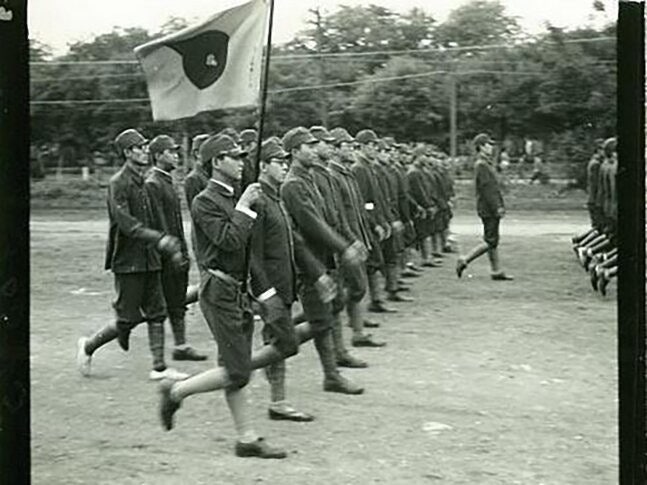
Korea is the only divided country in the world. After 35 years of Japanese colonization, Korea was liberated in 1945 but soon split into North and South under the influence of global powers. Then came the Korean War (1950–1953), which cost millions of lives and left deep scars.

                           Symbolic imagery representing the Japanese colonial rule of Korea
(일본이 한국을 점령한 35년은 오늘날까지 양국에 어두운 그림자가 짙게 드리워져 있습니다  The 35-year Japanese occupation still casts a long shadow over Korea–Japan relations today)

War-torn landscapes after the Korean War (1950–1953)
(일본 압제를 벗어난 지 5년 후 1950년 미국과 소련의 대리전으로 치러진 3년간의 한국전쟁은 전 국토를 완전 폐허로 만들었습니다.  Just five years after liberation from Japan, Korea was devastated again by the Korean War—a proxy war between the U.S. and the Soviet Union)

The Impact of Division

Division is not just a political issue—it profoundly affects how Koreans think and feel.
We know that “we could have been like North Korea,” and that thought drives our determination to succeed.


A map or symbol of a divided Korea with North and South
(우리 민족은 원치 않았던 남북 분단으로 섬이 된 한국, 아직까지 지구 유일한 분단국으로 남아 있습니다.  A nation divided against its will—Korea remains the only divided country in the world today)

It shaped our survival instincts and created a collective drive for progress.
It also limited political diversity in South Korea, where anti-communism became a foundational principle, leading to a more uniform political landscape.


3. The Driving Forces Behind Korea’s Growth


🔸 Education

Education has always been a top priority in Korean families. Our parents often sacrificed everything to give their children a better future. I’m deeply grateful to my own parents for this. In my school days, it was common to study late into the night. There was even a saying:
“Sleep four hours and pass, sleep five hours and fail.”

This obsession with education helped Korea develop rapidly. Even President Obama once said the U.S. should learn from Korea’s education system. While things have changed today, education remains a core value in our society.


🔸 Perseverance and Grit

Many foreigners say, “Koreans never give up.” I didn’t realize it myself until I heard it from non-Koreans. During the 1997 IMF crisis, people didn’t just complain—they acted. This determination is one of the reasons behind Korea’s remarkable growth.


🔸 Adaptability

Korea is constantly changing. We adapt quickly to new technologies and trends. Why?
Because we had nothing to lose. Poverty forced us to embrace change and innovation.
Countries that once thrived often resist change to preserve the past—but Korea had to move forward.

Chopstick holder at a Korean restaurant table for convenient self-service

(한국 모든 식당에서 볼 수 있는 탁자에 붙어 있는 숫가락 통, 식사하는데 필요한 물품들이 비치되어 있어서 아주 편리합니다. 20여년 전부터 생기기 시작해서 순식간에 전국 모든 식당에 보급되었어요  Chopstick holders attached to tables—now a staple of Korean restaurants for over 20 years, offering self-serve convenience)

                          Restaurant call bell for summoning staff in Korea

(식당 호출 벨, 식당에서 필요한 일이 생길때 웨이터를 기다리지 않고 벨을 눌러서 웨이터를 호출합니다. 20여년 전부터 생기기 시작한 대표적인 실용적 조치입니다. Call bells in restaurants allow diners to summon staff directly—a uniquely practical Korean innovation from 20 years ago)

That’s why I believe other developing countries can grow just as fast, if they take advantage of being latecomers with a clear goal in mind.
What do you think?


4. Korean Spirit and Emotion

If I were to describe Koreans in one phrase, I’d say:
“Warm-hearted people with strong spirit.”


🔹 Jeong (정) and Han (한)

Jeong is the deep emotional bond and affection we feel for others.
Han is a uniquely Korean concept—it's not just sorrow, but a mix of frustration, longing, and a will to overcome hardship.

You can find Han in Korean traditional music like pansori, and even in K-dramas and K-pop—where stories often show hope rising from despair.


A traditional Korean mask dance (Talchum) performance
(한국의 대표적인 전통문화인 탈춤, 현대의 K POP의 뿌리 입니다  Korea’s traditional mask dance (Talchum)—the cultural root of modern K-POP)


🔹 The “Hungry Spirit”

Korea lacks natural resources, so we had to rely on ourselves. That hunger built resilience.

  • After the war, our country was in ruins.

  • In the 1960s and 70s, people worked day and night to overcome poverty.

  • In 1997, we bounced back again from economic collapse.

This spirit of “we must survive no matter what” still lives on in Korean hearts.


5. Confucian Roots and Resistance Spirit


🔸 Filial Piety and Military Service

Loyalty to one’s country and respect for parents are central to Korean values.
All men serve in the military, and this is seen as a natural duty. Even global superstars like BTS have completed their service.

BTS’s J-Hope with a shaved head before military enlistment
(BTS 제이홉 입대, K POP 아티스트가 머리를 빡빡 깍고 입대하는 모습이 외국인 팬들에게는 낮설고 안타까운 모습일 것입니다  BTS’s J-Hope entering the military—his shaved head may appear unfamiliar and emotional to overseas fans)

BTS’s Jimin and Jungkook performing or appearing in June 2025
(2025.6월 BTS 지민, 정국 제대로 전 세계 아미들이 열광하고 있네요 In June 2025, BTS’s Jimin and Jungkook are captivating global ARMYs like never before)

Our language reflects this value system too—honorifics in Korean show deep respect based on age and status. That’s why Korean is often challenging for foreign learners.


🔸 The Scholar’s Spirit

Traditionally, scholars (Seonbi) were respected more than warriors. They believed in truth and justice, even at the risk of death.
This legacy lives on in Korean society today:

  • Leaders are expected to be ethical.

  • Whistleblowers are respected.

  • Citizens admire those who fight for what’s right.


🔸 Spirit of Protest

Koreans don’t stay silent in the face of injustice.

  • 1919 March 1st Movement and the Provisional Government during colonial rule


  • Historical photo or artwork of the March 1st Movement for independence
    (1919년 3월 1일 독립만세 운동, 전국적인 비폭력 독립운동으로 카이로회담(1942년 미국, 영국, 중국)에서 한국의 독립을 논의하는 중요한 계기를 만들었고, 지금도 3.1일은 국경일로 기념하고 있습니다  Korea’s March 1st Movement of 1919 was a peaceful uprising that laid the foundation for international recognition of Korean independence—it remains a national holiday today)

  • Democracy movements in the 1960s–80s

    Protest scenes from the 1987 Korean democratization movement
    (군사독재에 항거하여 민주화를 위한 끊임없는 투쟁으로 1987년 민주화를 이루었습니다 Through years of resistance against military dictatorship, Koreans achieved democratization in 1987)

  • The Candlelight Protests of 2016–2017, which peacefully changed a corrupt government

    Peaceful candlelight protests showing Korea’s democratic spirit
    (민주주의는 완성체가 아니라 발전하는 과정을 보여준 촛불 시위 Korea’s candlelight protests showed that democracy is not static—but an evolving journey)

  • Even during the 1992 LA Riots, Korean shop owners protected their communities with courage and unity

Koreans have a deep-rooted resistance spirit that values justice over fear.


💬 In Conclusion – What Defines the Korean Spirit?

The Korean soul is a tapestry of:

  • deep emotion (jeong)

  • sorrow-turned-hope (han)

  • resilience from poverty (hungry spirit)

  • and the courage to stand up for what’s right.


What kind of Koreans have you seen?
Are there similar values or emotions in your country’s culture?
Share your thoughts in the comments below—I’d love to hear from you!


A peaceful view of Cheonggyecheon stream in 2025 Seoul
(2025년 6월의 서울 도심속 청계천의 평화, 짧은 기간동안 많은 변화를 겪어낸 세월을 보냈습니다. 앞으로도 할일, 갈길이 멀겠죠? Cheonggyecheon stream in downtown Seoul, June 2025—a symbol of how far Korea has come, and how far it still has to go)

Watch the full video here 👇
Click the thumbnail below to see the story come to life on YouTube.


Hongdae Sangsangmadang 20th Anniversary: July 2025 Culture & Art Street Scene (Busking, Exhibitions, Cafes)

  ( 홍대앞 상상마당 건물, 젊음과 예술이 가득한 모습이죠?  The KT&G Sangsangmadang building in front of Hongdae, full of youth and art, isn't it?) Hongdae ...